Riding the Inclines
Ride a Pittsburgh Original
Few cities in America feature inclines, and none are as historic as the Monongahela or Duquesne inclines, both of which overlook one of the world's great cityscapes.
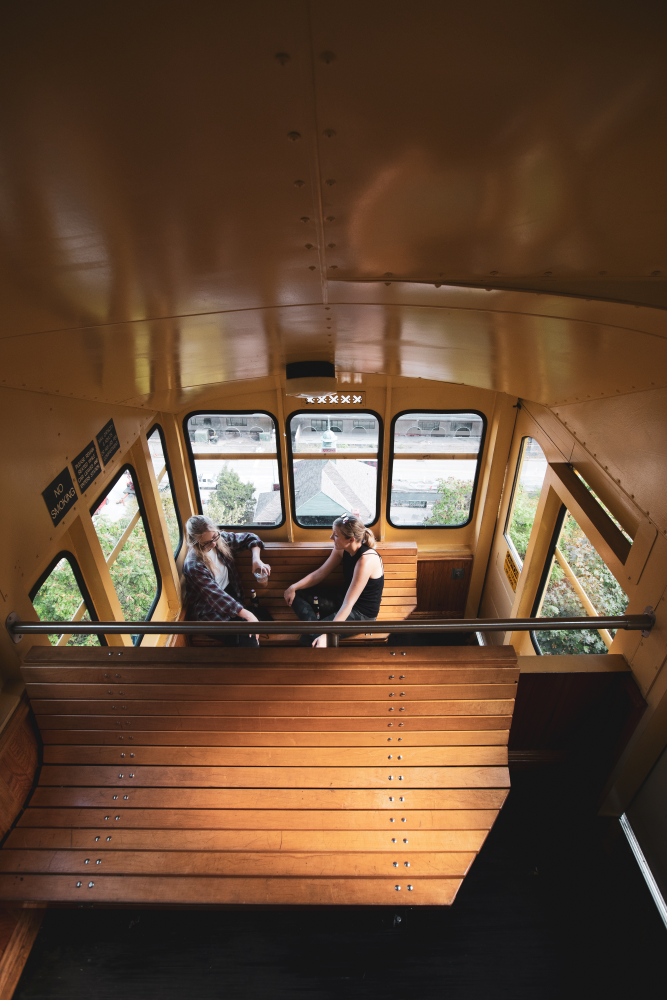
Monongahela Incline
Often called the Mon Incline, it is the oldest continuously operating funicular railway in the U.S. Opened on May 28, 1870, the Mon Incline transports more than a half a million riders each year.
The Monongahela Incline operates every 15 minutes.
| Monongahela Incline Hours | |
|
Weekdays and Saturdays |
5:30 a.m. to 12:45 a.m. |
|
Sundays and Holidays |
8:45 a.m. to midnight |
Fares are collected at the Upper Station.
| Monongahela Incline Fares | |
|
3-Hour Pass Valid 3-hours after activation |
$2.75 ($1.35) |
| Children 5 and under ride free | |
The Monongahela Incline is one of Pittsburgh's most iconic landmarks. It has a rich history deeply entwined with the city's development and industrial past.
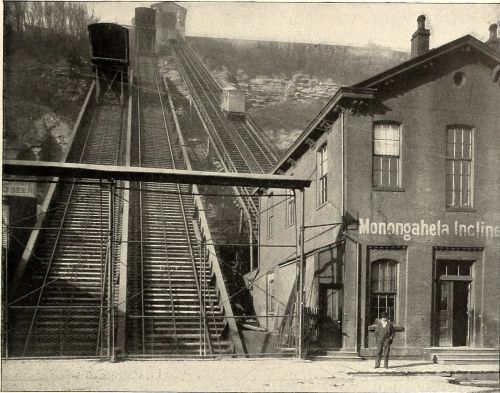
Early Development (Late 19th Century): The Monongahela Incline was constructed during the height of Pittsburgh's industrial boom in the late 19th century. It was designed to provide a convenient and efficient mode of transportation for workers living on Mount Washington, a steep hill overlooking downtown Pittsburgh, to commute to their jobs in the factories and businesses situated in the river valleys below.
Inception and Construction: The incline was designed by engineer Samuel Diescher, and construction began in 1869. It officially opened for public use on May 28, 1870. The incline originally operated using steam-powered engines to hoist the wooden cable cars up and down the hill.
Expansion and Modernization: Over the years, the Monongahela Incline underwent several renovations and modernization efforts to keep up with the city's evolving transportation needs. In 1935, the incline was electrified, replacing the steam-powered engines with electricity.
Decline and Revitalization: Like many inclines across the country, the Monongahela Incline faced a decline in ridership with the rise of automobiles and improved roadways. By the mid-20th century, the incline was at risk of closure due to financial challenges and decreased demand. When Port Authority of Allegheny County formed in 1964, it took over operation of the Monongahela Incline, likely saving it from being closed forever.
Cultural Icon and Heritage Site: Today, the Monongahela Incline stands not only as a functional mode of transportation but also as a beloved cultural icon and historic landmark in Pittsburgh. It offers breathtaking views of the city skyline and the three rivers that converge in Pittsburgh. It has been featured in numerous films, television shows, and works of art, further solidifying its place in Pittsburgh's identity.
Preservation and Recognition: In 1970, the Monongahela Incline was listed on the National Register of Historic Places, recognizing its significance as one of the few remaining funicular railways in the United States. Preservation efforts have ensured that the incline continues to operate and serve both residents and visitors to Pittsburgh.
Continued Operation: Despite technological advancements and changes in transportation preferences, the Monongahela Incline remains an integral part of Pittsburgh's transportation network. It continues to provide a unique and scenic mode of travel for commuters, tourists, and residents alike, connecting the neighborhoods of Mount Washington and the South Side Flats with downtown Pittsburgh.
Overall, the history of the Monongahela Incline reflects the resilience of Pittsburgh's industrial heritage and the city's ongoing efforts to preserve its historic landmarks while adapting to modern needs.
By foot
From downtown Pittsburgh
Go to Smithfield Street and turn south onto Smithfield Street. After crossing the Smithfield Street Bridge, cross West Carson Street and turn right. The lower station of the Monongahela Incline will be about 200 feet on your left.
From Shiloh Street (Mt. Washington)
Go north toward Grandview Avenue. The upper station will be across the street and about 50 feet on your right.
By Bus
We have several bus routes to take you to the Monongahela Incline!
To the lower station (Carson Street)
From downtown Pittsburgh, take the 39, 40, 41, 43, 44, 48, 51, 51L, Y1, Y45, Y46, Y47, or Y49 bus routes from Smithfield Street (at any cross street between Sixth Avenue and First Avenue) to The Landmarks Building at the end of the Smithfield Street Bridge. When you disembark the bus, turn left, cross West Carson Street, and turn right. The lower station will be about 200 feet on your left.
To the upper station (Grandview Avenue)
From Mt. Washington, both the 40 and 43 bus routes will not only get you closer to the upper station of the Monongahela Incline, they'll even get you all the way to downtown!
Via the "T"
From the North Shore/downtown
Take the 'T' toward the South Hills. Disembark at Station Square Station. Walk about 300 feet northwest to the lower station of the Monongahela Incline.
From the South Hills
Take the 'T' toward downtown. Dismebark at Station Square Station. Walk about 300 feet northwest to the lower station of the Monongahela Incline.
By Car
From downtown or the South Side
Station Square offers more than 3,500 parking spaces, including two surface parking lots and an indoor garage.
From Shiloh Street (Mt. Washington)
Metered parking is available along Grandview Avenue and Shiloh Street. The meters are free on Sundays!
By Bicycle
Yes, you can take your bicycle on the Monongahela Incline!
The upper compartment of the west car is both ADA accessible and can accommodate a bicycle.
Because of limited space, we ask that riders with dsiabilities take priority over riders using a bicycle.
From downtown Pittsburgh
Ride to Smithfield Street, then take Smithfield Street south. After crossing the Smithfield Street Bridge, cross West Carson Street and turn right. The lower station of the Monongahela Incline will be about 200 feet on your left.
From Shiloh Street (Mt. Washington)
Ride north toward Grandview Avenue. The upper station will be across the street about 50 feet on your right.
When the Monongahela Incline is closed, PRT operates shuttle vans that run every 10-15 minutes and serve the upper and lower stations.
For riders at the lower station
Board shuttles at the tempoary stop next to Station Square Station. These shuttles will travel to the upper station.
For riders at the upper station
Board shuttles at the tempoary stop between the upper station and the overlook. These shuttles will travel to the lower station.
Shuttle Hours
Shuttles operate from 5:30 a.m. to 12:45 a.m. on weekdays and Saturdays and from 8:45 a.m. to midnight on Sundays and holidays.
When shuttles are not available
In the event that shuttles are not available, riders at the lower station should proceed to the bus stop outside the Landmarks Building on the Smithfield Street Bridge and board a 40-Mt. Washington or 43-Bailey bus to Mt. Washington. These routes operate from 7 a.m. to 12:15 a.m. on weekdays and Saturdays and from 7 a.m. to 11 p.m. on Sundays and holidays.
Riders at the upper station should proceed to the bus stop at Virginia Avenue and Shiloh Street (near the Shop'N Save) to take a 40-Mt. Washington or 43-Bailey to the lower station. These routes operate from 6:10 a.m. to 12:07 a.m. on weekdays and Saturdays and from 6:26 a.m. to 10:23 p.m. on Sundays and holidays.
Duquesne Incline
The Duquesne Incline is owned by PRT and operated by the nonprofit Society for the Preservation of the Duquesne Heights Incline.
For more information about the Duquesne Incline, please call 412-381-1665 or visit the Duquesne Incline Website.
The incline operates every 15 minutes.
| Duquesne Incline Hours | |
|
365 days a year |
6:30 a.m. to 12:30 a.m. |