Rail Grinding Project
Year Two of Rail Grinding: Keeping Our Tracks Smooth, Safe, and Reliable
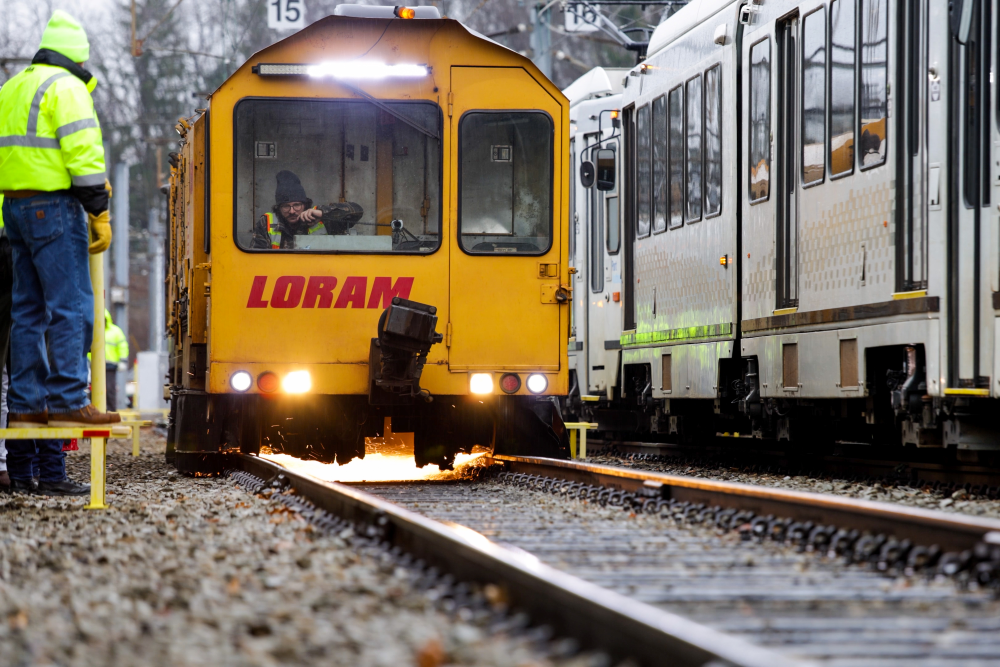
If you spotted sparks flying along the tracks last winter, you weren’t imagining things — and you’ll be seeing them again soon.
Pittsburgh Regional Transit is entering Year Two of a three-year rail grinding program, continuing critical maintenance work across the light-rail system in partnership with our contractor, RailWorks. This $1.5 million investment runs each January through March over three consecutive years, ensuring our rails remain safe, reliable, and built to last.
What is rail grinding — and why does it matter?
Rail grinding is a fundamental part of maintaining a modern rail system. Using a specialized grinding machine, crews restore the railhead to its proper shape and remove small defects that naturally develop over time. The process relies on the friction of grinding stones to bring the rail back to a uniform standard.
The benefits are significant:
-
Improved safety and reliability
-
Longer rail life
-
Reduced wear on rail car wheels
-
Better ride quality for riders
-
Increased system efficiency
In short, rail grinding helps keep trains running smoothly today while preventing bigger problems down the road.
When and where work will happen
Grinding work will take place weekdays during daylight hours, with some overnight work required to keep the project on schedule.
During Year Two, crews will focus on rail segments between:
-
South Hills Village and Washington Junction
-
Overbrook Junction and Boggs Station
-
Washington Junction to Library Station, if time permits
While work is underway, rail cars will single-track through active work zones.
What riders can expect
Service impacts will be rolling and dependent on daily progress. Riders may encounter:
-
Platforms temporarily out of service
-
Signage directing riders to board trains from the opposite platform
-
Minor delays in work areas
We’ll post clear signs at affected stations and provide updates as conditions change.
About those sparks…
Yes, you may see sparks while grinding is underway — that’s normal. The sparks are a byproduct of the grinding process, and strict safety measures are in place to ensure there’s no risk to people, property, or the environment.
Looking ahead
Rail grinding is one of those behind-the-scenes efforts that doesn’t always get noticed — until it’s not done. By continuing this work in Year Two, PRT is making sure our light-rail system remains dependable, comfortable, and ready to serve riders for years to come.
Thanks for your patience as we keep Pittsburgh moving.