PRT's Historic Bridges
Celebrating Iconic Bridges: The Panhandle Bridge
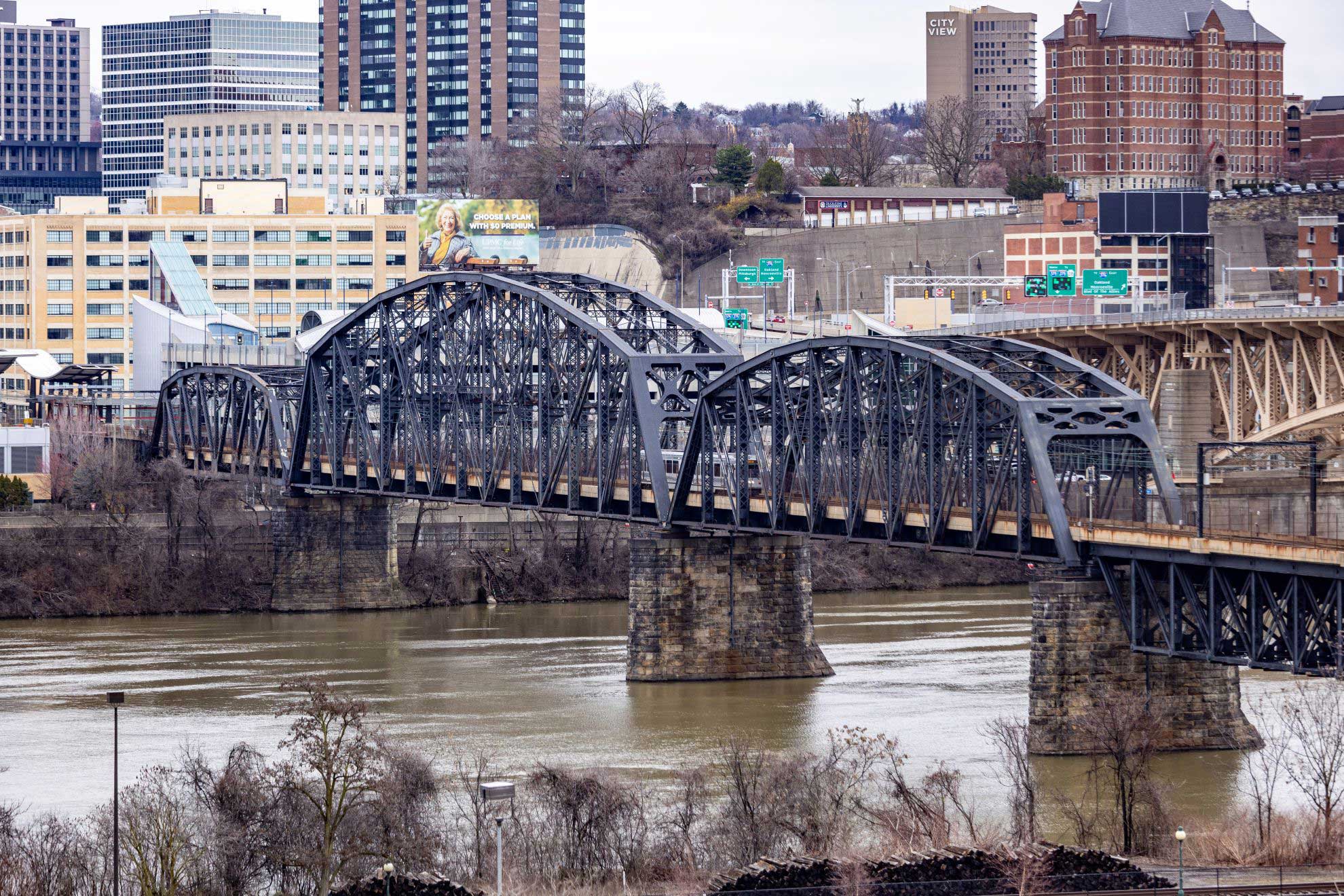
November is National Historic Bridges Month, and here in the City of Bridges, that feels especially worth celebrating.
National Historic Bridge Awareness Month began in 2006 and was intentionally set in November, when construction season typically winds down across the country. The goal is simple but important: to raise awareness that many historic bridges are replaced or demolished before their stories—and their value—are fully understood. These structures are more than infrastructure; they’re part of our shared cultural and industrial heritage.
Pittsburgh knows this better than most. With 446 bridges across the region, they span rivers, valleys, and neighborhoods, shaping how people move and how communities connect. The City of Pittsburgh owns 143 active bridges and maintains a public Bridge Dashboard that highlights ownership, condition, and location. Beyond city limits, ownership is shared among multiple agencies—including Pittsburgh Regional Transit, which owns 79 bridges across Allegheny County.
To mark National Historic Bridges Month, Pittsburgh Regional Transit is launching a Historic Bridges Spotlight Series, highlighting several of the bridges we own that carry historical and cultural significance. We’ll explore the stories behind their design and construction, the communities they connect, the generations of travelers they’ve served, and the work underway to preserve them for the future.
The Panhandle Bridge: Where Pittsburgh’s Past Meets Its Future
Few bridges in our region tell Pittsburgh’s story quite like the Panhandle Bridge.
Originally built for railroad use, the Panhandle Bridge wasn’t designed with light rail in mind—but today, it’s one of the most recognizable symbols of PRT’s transit system. This single structure has lived through multiple eras of Pittsburgh history, from the height of the steel industry to the city’s modern evolution as a diversified, post-industrial hub.
The bridge quite literally shows the past and the future at the same time.
Panhandle Bridge (Monongahela River Bridge)
Year constructed: 1863 (rebuilt in 1902)
Bridge type: Steel through-truss
Location: Spanning the Monongahela River between Downtown Pittsburgh and the South Side
Length: Approximately 785 feet (three-span structure)
Communities connected: Downtown, South Shore, and the broader South Hills light rail network
Fun fact: PRT even has a conference room named after the Panhandle Bridge.
From Freight Rail to Light Rail
The Panhandle Bridge began construction in the late 1800s as part of the Pittsburgh, Cincinnati, Chicago and St. Louis Railroad, commonly known as the Panhandle Route. At the time, it was one of the most important industrial corridors in the country, carrying freight that powered Pittsburgh’s steel, glass, and manufacturing industries westward to Ohio, Chicago, and beyond.
Unlike many historic railroad bridges that were later demolished or converted to trail use, the Panhandle Bridge evolved. When Penn Central—its owner at the time—entered bankruptcy in the 1970s, an opportunity emerged to reimagine the structure’s purpose. In the 1980s, the bridge was fully converted to support light rail transit, becoming one of the few former mainline railroad bridges in the United States to be successfully repurposed for active transit use.
Today, it carries light rail trains directly into Downtown Pittsburgh’s Golden Triangle, continuing its long tradition of connecting people, neighborhoods, and the region itself.
Preserving the Bridge for the Next Generation
The Panhandle Bridge remains an active transportation asset, and preservation work is essential to keeping it safe and reliable. Beginning in early summer 2026, PRT will launch a major rehabilitation project focused on improving the bridge’s substructure, track, overhead power lines, and electrical systems—along with a fresh paint job.
The project is expected to take approximately two and a half years, and light rail service will continue throughout construction using single-tracking across the bridge.
This work ensures that one of Pittsburgh’s most iconic bridges continues to serve riders for decades to come.